
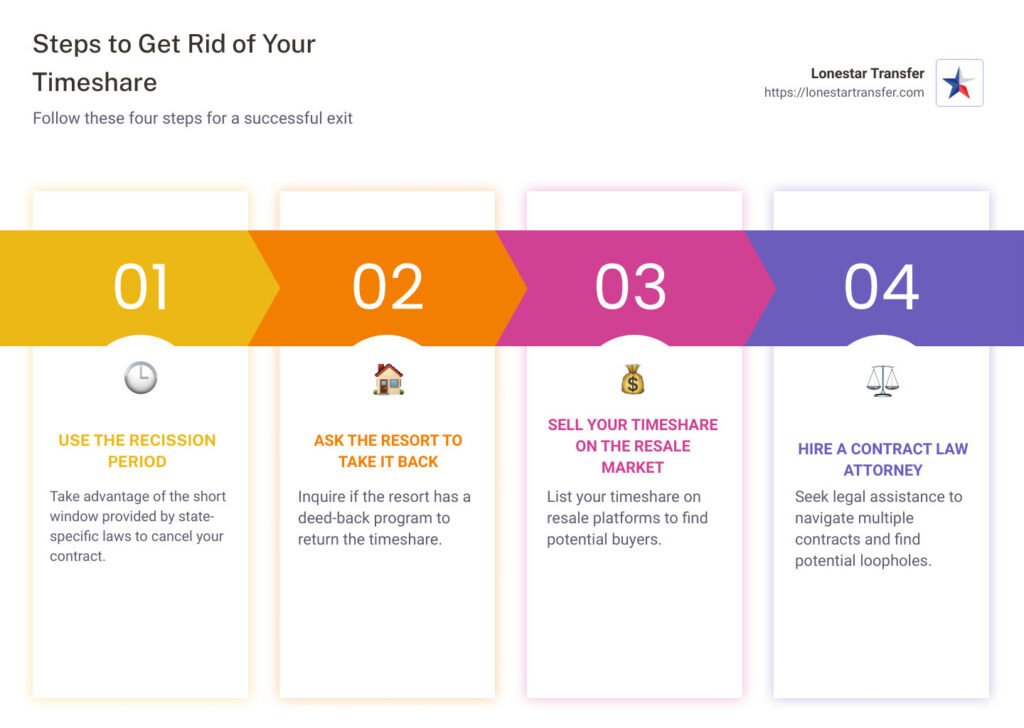
How to get rid of a timeshare is a question that haunts many timeshare owners. For a quick answer, here are the top options:
- Use the Recission Period
- Sell Your Timeshare on the Resale Market
- Hire a Timeshare Cancellation Company
Timeshare ownership, while initially appealing, often becomes a financial burden due to escalating maintenance fees and other unexpected costs. Many owners seek ways to exit their contracts due to these ongoing costs. Many timeshare owners find themselves trapped, unable to book vacations as promised and weighed down by never-ending payments.
Companies like Lonestar Transfer specialize in legally helping you escape these binding contracts. We aim to bring transparency and peace of mind to timeshare owners seeking relief. Navigating the process of getting rid of a timeshare legally often requires careful planning and the guidance of legal professionals to ensure your rights are protected and to avoid potential scams.
When considering the resale market, it’s important to know that most timeshares sell for far less than their original price, making resale a challenge for owners.
Lonestar Transfer has over 15 years in the timeshare industry, We’ve helped countless individuals understand how to get rid of a timeshare legally and effectively. Government agencies and consumer protection groups also work to protect consumers from unfair timeshare practices. Let’s explore the next steps to reclaiming your financial freedom.
Understanding Your Timeshare Contract
The Rescission Period
The rescission period is your golden ticket out of a timeshare contract if you act quickly. This is a short window of time, usually ranging from three to 15 days, where you can cancel your timeshare purchase without any penalties. This period is also known as a cooling off period and serves as a legal protection for buyers, allowing you to reconsider your decision and avoid financial losses.
State laws govern the duration of this period, and it varies based on where your timeshare is located—not where you live. For example, Kansas and Ohio offer a minimum of three days, while Alaska provides up to 15 days.
To take advantage of the rescission period, you need to send a cancellation letter to the resort. This letter should include:
- Names on the signed agreement
- The name of the timeshare developer
- Cancellation address of the resort
- Today’s date
- The purchase date
- The agreement contract number
- The amount of the original purchase price
- A statement declaring your cancellation
- Your contact information, including mailing address, phone number, and email
Legitimate reasons for cancellation during the cooling off period include financial hardship, misrepresentation during the sales process, or simply changing your mind.
Mail this letter using certified mail to ensure the resort receives it and cannot claim otherwise. The clock is ticking, so act quickly to avoid missing this crucial window.
Reviewing Your Contract
Understanding the terms and conditions of your timeshare contract is essential. The fine print often contains important details about your rights and obligations. Take time to review your timeshare agreement in detail, as it outlines the specific terms you must follow.
Cancellation Policies: Your contract will outline the specific steps for canceling your timeshare. Make sure you understand these policies thoroughly. If any clauses are complex or unclear, consult legal professionals to ensure you interpret them correctly and protect your interests.
State-Specific Laws: Different states have different laws regarding timeshare cancellations. For instance, some states may offer more lenient terms if you meet certain requirements.
Terms and Conditions: Pay close attention to any clauses that might affect your ability to cancel, such as the requirement to send a cancellation letter within the rescission period. Also, check if your contract allows for a deed back or participation in deed back programs, which can provide a straightforward way to relinquish your timeshare directly to the resort.
Certified Mail: Always use certified mail to send your cancellation letter. This provides proof that the resort received your letter, protecting you from any claims that they didn’t.
By understanding your contract and the rescission period, you can take informed steps to legally get rid of your timeshare. Next, we’ll explore other strategies if you’ve missed this window.

Evaluating Your Current Situation
Before you take any steps toward timeshare cancellation, it’s essential to take a close look at your current situation. Start by reviewing your timeshare contract to fully understand your legal rights and ongoing responsibilities. Many timeshare owners are surprised by the complexity of their agreements and the long-term commitments they’ve made, especially when it comes to rising maintenance fees and other recurring costs.
Assess your financial obligations, including any outstanding mortgage balances, special assessments, and annual maintenance fees. If you’re finding it difficult to keep up with these payments or if your timeshare usage no longer fits your lifestyle, it may be time to consider your exit options. Many timeshare owners face similar challenges, and you’re not alone in seeking relief.
A reputable timeshare exit company can help you navigate this process by evaluating your contract, clarifying your obligations, and outlining the best strategies for timeshare cancellation. With expert guidance, you can avoid costly mistakes and move forward with confidence, knowing you’re making informed decisions about your timeshare exit.
Understanding Your Legal Rights
Knowing your legal rights as a timeshare owner is crucial when planning your exit strategy. Every timeshare contract is different, and many timeshare owners are unaware of the protections and options available to them. For example, the rescission period—typically ranging from 3 to 15 days depending on the state—allows you to cancel your timeshare contract without penalty if you act quickly after purchase.
It’s also important to understand the type of ownership you have. Deeded ownership and right-to-use agreements come with different legal implications, especially if the timeshare company fails to uphold its end of the contract. If you suspect a breach or have questions about your rights, consulting a qualified attorney or a reputable timeshare exit company can help you avoid timeshare exit scams and ensure your interests are protected.
Many timeshare owners fall victim to misleading promises or high-pressure tactics, so always verify the credentials of any exit company or legal professional you work with. By understanding your legal rights and the terms of your contract, you can confidently move forward and cancel your timeshare the right way.
Get Rid of a Timeshare
If you’ve just bought your timeshare and are already regretting it, don’t panic. The rescission period is your best friend. This is a short window of time where you can cancel your timeshare contract without any penalties. The length of this period varies by state—from as short as three days in Kansas and Ohio to as long as 15 days in Alaska.
There are several timeshare exit strategies available, depending on your situation.
Steps to take:1. Check State Laws: The rescission period is based on where your timeshare is located, not where you live. Look up the specific laws for the state of your timeshare. 2. Write a Cancellation Letter: Your letter should include names on the agreement, the name of the timeshare developer, cancellation address, today’s date, purchase date, agreement contract number, original purchase price, and your contact information. 3. Send via Certified Mail: Use certified mail to send your cancellation letter. This gives you proof that the resort received your letter, protecting you from any claims that they didn’t.
Missed the rescission period? When all else fails, a timeshare exit company might be your last resort. These companies specialize in helping people get out of their timeshares, but beware of scams. You can also consider selling your timeshare on the timeshare resale market, but be aware that timeshare resale can be challenging due to limited demand and low resale values. Timeshare resale companies often promise quick sales, but many require large upfront fees and may not deliver results. Always use licensed real estate agents when navigating the resale process to avoid scams and ensure a legitimate transaction.
Steps to take:1. Research Companies: Look for a company with a proven track record and positive third-party reviews. Always check BBB ratings and bbb ratings before choosing an exit company to verify their credibility. The federal trade commission is also a valuable resource for identifying and avoiding timeshare scams.
2. Understand the Costs: Fees can range from $2,000 to $15,000 or more. Costs range widely depending on the complexity of the case and the method chosen, so request a detailed quote. If you are experiencing financial hardship, document your situation, as this can support your case for cancellation. Remember, even a paid off timeshare can continue to incur yearly fees and future financial obligations, so it’s important to understand all ongoing costs.
3. Avoid Scams: Be cautious of companies that are pushy and use high pressure sales tactics. Many timeshare exit companies demand large upfront fees, which is a common red flag for scams. Work with a company that offers a 100% guarantee in writing, like we do at Lonestar Transfer. Complex cases may require legal cancellation and the assistance of legal professionals to ensure the process is official and binding.
If you are considering whether to stop paying your timeshare fees, understand that stop paying should only be considered as a last resort, as it can have serious credit and legal consequences.
Financial Implications of Timeshare Cancellation
Canceling your timeshare can have significant financial consequences, so it’s important to be prepared before starting the process. Many timeshare owners are surprised to learn that stopping payments or walking away can negatively impact their credit report, especially if the timeshare company initiates foreclosure or collections. Additionally, some contracts require you to pay annual fees or maintenance fees even after you’ve stopped using the property, until the cancellation process is officially complete.
Upfront fees are another consideration—some timeshare exit companies charge for their services, and it’s vital to understand exactly what you’re paying for. Be wary of timeshare exit scams that promise quick results for high fees without delivering real solutions. Always review all documentation carefully and check the company’s reputation with organizations like the Better Business Bureau.
A trustworthy timeshare exit company can help you minimize your financial obligations and avoid unnecessary costs. By taking a careful, informed approach, you can protect your finances, avoid scams, and achieve a successful timeshare exit that puts you back in control of your financial future.
Do’s and Don’ts When Exiting a Timeshare
When you’re ready to get rid of a timeshare, careful planning is essential before taking any action. It’s important to follow best practices and avoid common pitfalls. Here’s what you should and shouldn’t do:
Do’s
Read Your Agreement
Carefully review your timeshare contract. Look for any clauses that mention exit strategies or the rescission period. This information can be crucial in forming your exit plan. For complex situations, consider consulting legal experts to ensure your exit process is handled correctly.
Hire a Timeshare Cancellation Company
If you are outside the rescission period or if you inherited the property, hiring a timeshare cancellation company like Lonestar Transfer will guarantee you get out of your contract.
Sell Your Timeshare
If you choose to sell your timeshare, working with licensed real estate agents can help you navigate the resale market and avoid scams.
Don’ts
Don’t Rent Out Your Timeshare
Many timeshare agreements explicitly prohibit renting out your unit. Even if allowed, you’ll still be responsible for maintenance fees and potential property damage. This can complicate your exit strategy.
Don’t Give Away Your Timeshare
Giving your timeshare away might seem like a quick fix, but it could be illegal and may still leave you responsible for maintenance fees and future issues. Always consult legal advice before taking this step.
Don’t Stop Making Payments
Halting payments might seem like a way to force an exit, but it can lead to severe consequences. The developer could take legal action, send your debt to collections, and harm your credit score. Foreclosure could also appear on your credit report for years. The option to stop paying should only be considered in extreme circumstances and may require a legal cancellation process to avoid further financial damage.
Complex cases, such as those involving disputes or complicated contracts, may require professional legal assistance to resolve and ensure a proper legal cancellation.
By following these do’s and don’ts, you can navigate the complex process of exiting a timeshare more effectively.

Frequently Asked Questions about How to Get Rid of a Timeshare
How much does it cost to get out of a timeshare?
The cost to get out of a timeshare can vary widely depending on the method you choose. Here are some common exit strategies and their potential fees:
- Hiring a Contract Law Attorney: Legal fees can be substantial. Attorneys specializing in timeshare exits may charge hourly rates, flat fees, or contingency fees. Costs can range from a few hundred to several thousand dollars, and the costs range widely depending on the complexity of your case and the cancellation method used.
- Timeshare Exit Companies: These companies charge for their services, typically ranging from $3,000 to $7,000. Be cautious and ensure the company has a proven track record and good third-party reviews. It’s important to obtain a detailed quote to understand the specific expenses involved.
- Selling Your Timeshare: Listing your timeshare for resale might involve minimal costs if you choose no up-front fee websites. However, you may still need to pay for appraisals or advertising. The timeshare resale market is known for its limited liquidity and can be challenging, with most timeshares sitting on the market for months or even years without selling. Factors such as location and yearly fees can influence your resale success.
While these fees can add up, the goal is to avoid the ongoing maintenance costs, which average $1,120 per year and often increase annually. Over time, these yearly fees can accumulate and even surpass the original purchase price of the timeshare.
Can you get out of a timeshare without a lawyer?
Yes, you can get out of a timeshare without a lawyer. Here are some steps you can take:
- Use the Rescission Period: If you’re within the rescission period (usually 3 to 15 days depending on your state), you can cancel the contract without legal help. Check your contract for specific details and send a cancellation letter via certified mail. Make sure to gather all legal documents and reference your original contract when submitting your cancellation request.
- Sell Your Timeshare: You can list your timeshare on resale websites or contact a real estate agent who specializes in timeshares. Working with licensed real estate agents can help you navigate the resale market safely and avoid scams. Be prepared to sell at a significant loss, often recouping only 10 to 20 cents on the dollar. IF the property even sells, the vast majority do not sell.
- Timeshare Exit Companies: While these companies charge for their services, they can manage the exit process for you, potentially avoiding the need for a lawyer.
Conclusion
Getting out of a timeshare can feel overwhelming, but it’s not impossible. We’ve explored various strategies, from using the rescission period to hiring a contract law attorney, and even selling your timeshare on the resale market. Each option has its own set of benefits and challenges, but the key is to choose the one that best fits your situation.
At Lonestar Transfer, we specialize in helping you navigate this complex process. Our goal is to provide you with peace of mind and financial freedom by legally removing you from your timeshare obligations. We understand the stress that comes with timeshare ownership, and we’re here to make the exit process as smooth and straightforward as possible.
Financial freedom is within reach. By taking the right steps and avoiding common pitfalls, you can break free from your timeshare. Imagine no more annual fees, no more maintenance costs, and no more feeling trapped. That’s the peace of mind we aim to deliver.
If you’re ready to take the next step, contact us for a free consultation. Let’s work together to free you from the timeshare trap and get you back on the path to financial freedom.