
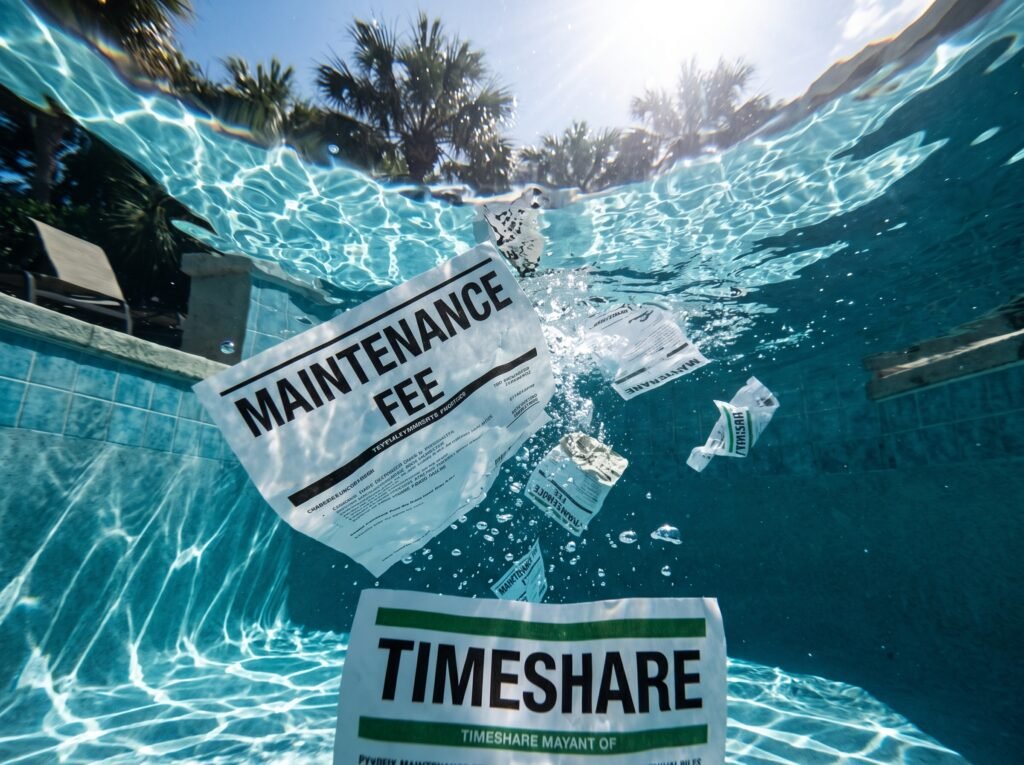
If you own a timeshare you no longer use, the annual maintenance-fee bill can be frustrating.
Maybe your timeshare has been paid off for years. Maybe you rarely visit the resort anymore. Perhaps the fees have increased to the point where the ownership no longer makes financial sense.
Whatever the reason, you may be asking:
How do I stop paying timeshare maintenance fees?
The most important distinction is this:
Simply stopping your payments is not the same as ending your responsibility for the timeshare.
If you are still responsible for the ownership, unpaid maintenance fees may lead to late charges, collection efforts, restrictions on using the timeshare, and potentially other consequences depending on your contract, ownership structure, resort or association rules, and applicable law.
A better goal is to find an appropriate way to end the ownership or contractual obligation that creates future maintenance fees.
Here is what timeshare owners should know before deciding what to do.
What Are Timeshare Maintenance Fees?
Timeshare maintenance fees are recurring charges associated with operating and maintaining a timeshare property or vacation ownership program.
Depending on the property and program, maintenance fees may help cover expenses such as:
- Property upkeep
- Repairs
- Utilities
- Landscaping
- Insurance
- Management
- Resort employees
- Common areas
- Amenities
- Administrative expenses
Maintenance fees are generally separate from the amount you originally paid to purchase the timeshare.
That means paying off your original purchase or timeshare mortgage does not necessarily eliminate your maintenance-fee obligation.
For a more detailed explanation, read What You Should Really Know About Timeshare Maintenance Fees.
Do You Still Have to Pay Maintenance Fees If You Don’t Use the Timeshare?
Generally, simply deciding not to use the timeshare does not end the financial obligations associated with owning it.
The Federal Trade Commission advises consumers to factor annual maintenance fees into the cost of a timeshare and notes that owners may have to pay fees and taxes even when they do not use the timeshare.
You can read the FTC’s guidance here: Timeshares, Vacation Clubs, and Related Scams.
Your exact responsibilities depend on your purchase agreement, governing documents, type of ownership, resort or association rules, and applicable law.
If you have not reviewed those documents recently, that is a good place to start.

Why Do Timeshare Maintenance Fees Become a Problem?
Timeshare ownership can make sense to an owner when circumstances are different.
But situations change.
Owners may want to eliminate maintenance fees because of:
- Retirement
- Job loss
- Reduced income
- Health changes
- Less frequent travel
- Difficulty using the timeshare
- Increased household expenses
- Changes in family circumstances
- Special assessments
- Increasing annual fees
- No longer wanting the property
Maintenance fees can also increase over time.
If increases are one of your main concerns, read Timeshare Maintenance Fees Are Increasing and Here’s Why.
Whatever your reason for wanting out, it is important to distinguish between a temporary inability to pay and a desire to permanently end the ownership.
Can You Just Stop Paying Timeshare Maintenance Fees?
You can choose not to make a payment, but nonpayment does not by itself cancel a timeshare.
If the maintenance fees remain validly due, the account may become delinquent.
What happens next varies.
Depending on your particular timeshare and circumstances, possible consequences may include:
- Late charges
- Additional amounts permitted under the governing documents
- Loss or suspension of usage privileges
- Collection efforts
- Possible reporting associated with collection activity
- Legal remedies available under the applicable documents and law
- Potential foreclosure proceedings in some circumstances involving certain ownership interests
Not every owner will experience all—or necessarily any particular one—of these outcomes.
That is why owners should be cautious about statements claiming that one specific consequence is guaranteed.
Can Unpaid Timeshare Maintenance Fees Be Sent to Collections?
They may be.
Depending on how the resort, association, creditor, or other responsible party handles a delinquent account, unpaid amounts may eventually be pursued through collection activity.
If a third-party debt collector contacts you, do not automatically assume that ignoring the communication will make the underlying issue disappear.
The Consumer Financial Protection Bureau recommends reviewing information such as:
- The identity of the collector
- The name of the creditor
- The amount claimed
- Whether the debt belongs to you
- How to dispute the debt if you believe it is incorrect
The CFPB provides additional information here: Know Your Rights When a Debt Collector Calls.
The CFPB also explains that telling a collector to stop contacting you does not necessarily eliminate a valid debt or prevent other lawful collection methods.
Can Unpaid Maintenance Fees Affect Your Credit?
Potentially, but owners should be careful with overly broad claims about credit.
It is not accurate to say that every missed timeshare maintenance-fee payment will automatically appear on your credit report.
Whether a particular debt is reported depends on factors such as how the account is handled, whether a debt collector becomes involved, whether information is furnished to a consumer reporting company, and compliance with applicable reporting requirements.
The CFPB explains that debt collectors must take certain steps before reporting a debt to a credit reporting company.
You can review that guidance here: When Can a Debt Collector Report My Debt to a Credit Reporting Company?.
If protecting your credit is an important concern, read How to Get Out of Your Timeshare Without Ruining Your Credit.
The key point is not to assume either that credit damage is inevitable or that nonpayment carries no credit risk.
Can Unpaid Maintenance Fees Lead to Foreclosure?
Foreclosure may be possible in some timeshare situations, particularly where the ownership involves a deeded interest and applicable documents and law provide a remedy for unpaid obligations.
But there is no single foreclosure rule that applies to every timeshare in every state.
Factors can include:
- How the timeshare is legally structured
- Where the property is located
- What type of obligation remains unpaid
- The governing documents
- Resort or association procedures
- Applicable state law
That means it would be inaccurate to tell every timeshare owner that missing maintenance fees automatically results in foreclosure.
It is more accurate to say that foreclosure or another enforcement remedy may be possible in some circumstances.
For more information, read Can Your Timeshare Get Foreclosed On?.
If you have already received a foreclosure notice, lawsuit, lien notice, or other formal legal document, consider getting advice specific to your situation and jurisdiction.

How Do You Stop Paying Timeshare Maintenance Fees the Right Way?
For an owner who wants permanent relief, the real objective is usually not simply:
“How do I stop sending the payment?”
It is:
“How do I reach a point where I am no longer responsible for future maintenance fees?”
Depending on the timeshare and the owner’s situation, several possible avenues may be worth investigating.
Option 1: Check Whether You Can Still Rescind a Recent Purchase
If you purchased the timeshare recently, review your purchase agreement immediately.
Depending on the applicable law and transaction, there may be a limited rescission or cooling-off period.
The deadline can be short.
Requirements may specify:
- How notice must be given
- Where it must be sent
- The deadline
- What information the notice must contain
Follow the written requirements carefully.
The FTC recommends that timeshare buyers understand whether a cancellation or cooling-off period applies to their purchase.
If you are outside that period, other exit options may need to be considered.
Option 2: Contact the Resort or Developer First
If your rescission period has expired, consider contacting the timeshare company, resort, developer, or management company directly.
Ask whether it has an official exit program.
Depending on the company, you may hear terms such as:
- Voluntary surrender
- Deed-back
- Relinquishment
- Owner transition
- Owner exit program
The FTC recommends contacting the timeshare company directly about available exit options before hiring an outside company.
When speaking with the resort, ask specific questions:
- Does my ownership qualify?
- Does my mortgage have to be paid off?
- Do maintenance fees have to be current?
- Do special assessments have to be paid?
- Are there processing or transfer fees?
- Will the program end future maintenance-fee obligations?
- What documents will prove that the process is complete?
Whenever possible, obtain important terms in writing.
Option 3: Explore a Deed-Back Program
Some resorts allow qualifying owners to voluntarily return their ownership.
This is often called a deed-back or surrender program.
However, eligibility can vary.
A resort may require that:
- The timeshare has no outstanding mortgage
- Maintenance fees are current
- Assessments are current
- The ownership qualifies under the program
- Required documentation is completed
Owners should not assume every resort must accept a timeshare simply because the owner no longer wants it.
It is also important to understand exactly what the deed-back resolves.
Option 4: Consider a Timeshare Title Transfer
For some qualifying timeshares without an outstanding mortgage, transferring ownership may provide a path toward ending future ownership obligations.
A proper timeshare transfer may involve several steps depending on the type of ownership and property.
Those steps can include:
- Preparing transfer documents
- Satisfying resort requirements
- Completing association paperwork
- Paying applicable transfer or recording fees
- Recording documents when required
- Updating the ownership records
The important point is that simply signing a piece of paper or finding someone willing to “take over the payments” does not necessarily mean a transfer has been completed.
The ownership needs to be transferred according to the requirements that apply to that timeshare.
For more information, read Everything You Need to Know About a Timeshare Transfer.
You can also review How to Successfully Transfer Your Timeshare.
Lonestar Transfer helps qualifying timeshare owners with title-transfer services designed to properly transfer eligible ownerships.
Option 5: Address a Remaining Timeshare Mortgage
Do not confuse your maintenance fees with your purchase loan.
They are separate obligations.
An owner may have:
Timeshare mortgage: Still owed
Maintenance fees: Still owed
Or:
Timeshare mortgage: Paid in full
Maintenance fees: Still owed
This distinction directly affects the possible exit strategies.
If you still owe money on the original timeshare purchase, a standard title transfer may not resolve the financing obligation.
That is why owners with outstanding loans should review the mortgage separately.
Read How to Get Rid of a Timeshare With a Mortgage Balance for a detailed explanation.
You can also read Timeshare Mortgage Cancellation: Everything You Need to Know.
Lonestar Transfer evaluates mortgage-cancellation options for qualifying owners separately from standard title-transfer situations because financed ownerships involve different considerations.
Option 6: Consider Whether Resale Is Realistic
Some owners try to sell their timeshare so that someone else becomes the owner.
Resale can be possible in certain situations, but owners should not assume their timeshare will sell for anything close to its original purchase price.
Market demand varies substantially based on factors such as:
- Resort
- Location
- Ownership type
- Week or season
- Points program
- Annual maintenance costs
- Transfer restrictions
The FTC warns consumers about timeshare resale companies making claims such as having buyers already waiting or guaranteeing large returns.

Option 7: Evaluate Professional Timeshare Exit Assistance
If you have already contacted the resort and do not have a workable solution, you may decide to evaluate professional assistance.
Choose carefully.
Before hiring a timeshare exit company, ask:
- What service are you providing?
- How does it apply to my particular timeshare?
- What happens to the ownership?
- What happens to my mortgage, if I have one?
- What documentation will I receive?
- What fees will I pay?
- What promises are actually included in the written agreement?
The FTC warns consumers about exit companies that make guarantees, demand large upfront payments, or simply instruct owners to stop paying their mortgage or maintenance fees.
Read the FTC’s guidance at Timeshares, Vacation Clubs, and Related Scams.
You can also use Do You Know What to Look for in a Reputable Timeshare Exit Company? as an internal Lonestar Transfer resource when comparing providers.
Be Cautious If Someone Tells You to “Just Stop Paying”
This point is especially important.
The FTC specifically lists instructions to stop paying a timeshare mortgage or fees as a warning sign consumers should watch for when evaluating timeshare exit companies.
That does not mean every timeshare case has the same outcome.
It means owners should understand what a recommended strategy actually involves.
If someone advises you to stop paying, ask:
- Why is this being recommended?
- What happens to the unpaid fees?
- Could the account become delinquent?
- Could collection activity occur?
- What happens to the ownership?
- What documentation proves that my responsibility has ended?
A permanent exit should have a defined result.
Simply allowing bills to accumulate is not the same thing as transferring or otherwise resolving an ownership.
What If You Have Already Stopped Paying Maintenance Fees?
If your account is already behind, gather your documents before deciding what to do next.
Look for:
- Your most recent maintenance-fee statement
- Past-due notices
- Resort correspondence
- Collection letters
- Your original purchase agreement
- Deed or membership paperwork
- Mortgage statements, if applicable
- Any legal notices
Then determine:
- How much is claimed to be due
- What additional charges have been added
- Who currently claims the debt
- Whether a third-party collector is involved
- Whether you have received a formal legal notice
- Whether there is still a mortgage associated with the timeshare
If a debt collector contacts you, the CFPB provides information about validating and disputing debts and keeping records of communications.
See Know Your Rights When a Debt Collector Calls.
Do not ignore an actual lawsuit, foreclosure document, or other formal legal notice. Consider seeking appropriate legal advice for your specific circumstances.
Should You Pay Past-Due Maintenance Fees Before Exiting?
There is no universal answer that applies to every owner.
Some resort surrender or transfer programs may require the maintenance-fee account to be current.
Others may have different requirements.
Before paying a past-due balance solely because someone says doing so will qualify you for an exit, ask for the requirements in writing.
Find out:
- What must be paid
- Why payment is required
- Whether it makes you eligible
- Whether acceptance is guaranteed or discretionary
- What happens after payment
- What documentation you will receive
Paying a balance and completing an exit are two separate issues.
Do not assume one automatically guarantees the other.
Does Paying Off Your Timeshare Stop Maintenance Fees?
Not necessarily.
This is one of the most common misunderstandings about timeshare ownership.
An owner might have:
Purchase loan balance: $0
while still having:
Annual maintenance fees: Due under the ownership
Paying off the original purchase loan eliminates that particular debt. It does not necessarily terminate the underlying timeshare ownership or the obligations that come with it.
If your timeshare is already paid off and maintenance fees are the main reason you want out, a properly structured title-transfer option may be worth evaluating.
Can You Give Your Timeshare to Someone Else?
Possibly, but the transfer needs to be completed correctly.
Depending on the ownership, requirements may include:
- Transfer documents
- Resort approval or notification
- Association requirements
- Recording a deed
- Transfer fees
- Updated ownership records
- Other property-specific requirements
Do not assume you are free from future obligations merely because another person verbally agrees to take the timeshare.
Make sure the necessary transfer process has actually been completed.
Read How to Successfully Transfer Your Timeshare for additional information.
How Do You Know When You’re Actually Out of the Timeshare?
This is an important question.
The answer depends on the exit method used, but you should expect appropriate documentation showing what happened to the ownership or contractual obligation.
Depending on the circumstances, that documentation might include:
- Recorded transfer documents
- Resort or association confirmation
- Written cancellation or release documentation
- Updated ownership records
- Other documentation specific to the transaction
Keep those records permanently.
Do not rely exclusively on a verbal statement that says:
“You’re out.”
Ask what documentation establishes the result.

How Lonestar Transfer Can Help
Lonestar Transfer helps timeshare owners evaluate permanent exit solutions based on their individual circumstances.
For qualifying owners whose timeshare is mortgage-free, a title transfer may be an available option.
For qualifying owners who still owe money on the original timeshare purchase, mortgage cancellation may be the more relevant service.
Factors that can affect the available path include:
- Resort or developer
- Type of ownership
- Mortgage status
- Account status
- Governing documents
- Transfer requirements
- Individual circumstances
Lonestar Transfer’s objective is not simply to tell an owner to stop paying maintenance fees.
The goal is to evaluate whether there is an appropriate way to resolve the ownership or contractual obligation responsible for those recurring fees.
Frequently Asked Questions
Simply stopping payments while you remain responsible for the timeshare may cause the account to become delinquent.
The more useful question is whether you have an appropriate way to end the ownership or contractual obligation that creates future fees.
That might involve a surrender, transfer, cancellation, or another option depending on your circumstances.
The result depends on the timeshare, governing documents, account, and applicable law.
Possible consequences may include late charges, restrictions on usage, collection efforts, possible credit reporting, or other enforcement remedies.
No single outcome should be assumed to apply automatically to every owner.
Not necessarily.
Whether delinquent timeshare-related debt ultimately appears on a credit report depends on how the account is handled and whether information is reported in compliance with applicable requirements.
However, owners should not assume there is no potential credit risk.
They may.
If a debt collector becomes involved, review the debt carefully and understand your rights to obtain information and dispute inaccurate debts.
Foreclosure or another enforcement process may be possible in certain circumstances, particularly with some deeded timeshare interests.
The exact rules depend on the ownership structure, governing documents, property location, and applicable law.
Not necessarily.
The mortgage and maintenance-fee obligation are separate. Paying off the purchase loan does not necessarily terminate the timeshare ownership.
Some resorts offer deed-back, surrender, or owner-exit programs.
Eligibility varies, and programs may require that the mortgage and maintenance fees are current or paid in full.
A properly completed transfer may end future ownership obligations for the former owner, depending on the ownership, applicable documents, and completion of required transfer procedures.
The transfer must actually be completed and recognized rather than merely informally agreed upon.
The Goal Is Not Just to Stop Paying—It’s to End the Obligation
If your maintenance fees have become unaffordable or you simply no longer want your timeshare, it can be tempting to stop opening the bills.
But there is a major difference between:
Stopping your payments
and
reaching a documented resolution that ends your future responsibility.
Simply stopping payment can create a delinquent account without solving the underlying ownership problem.
A properly completed exit addresses the ownership or contractual obligation itself.
Start by reviewing your documents and contacting your resort about its available exit programs.
If the resort cannot provide a workable solution, evaluate whether a title transfer, mortgage cancellation, or another appropriate option may apply to your situation.
Lonestar Transfer helps qualifying timeshare owners evaluate permanent exit solutions, including title-transfer and mortgage-cancellation services. Contact Lonestar Transfer for a free consultation to learn which options may apply to your ownership.
This article provides general educational information and is not legal, tax, credit, or financial advice. Timeshare contracts, resort policies, association documents, ownership structures, and state laws vary. If you have received a lawsuit, foreclosure notice, lien notice, or other formal legal document, consider obtaining advice specific to your circumstances.